Four rules that do all the work
A mantel is a long horizontal shelf at eye level, which makes it the most-looked-at surface in most living rooms and the easiest to get wrong. Almost every unsuccessful mantel fails the same way: objects lined up in a row, evenly spaced, all roughly the same height. It reads as a shop shelf. Four rules fix it, and they apply equally to all three looks below.
Rule one: work in triangles. Group objects so the eye traces a triangle rather than a line — tall at one end, medium at the other, low in the middle, or any variation. Rule two: vary height aggressively. If your tallest object is not at least twice the height of your shortest, the arrangement will look flat. Books are the cheapest height you own; stack three and put something on top.
Rule three: leave the middle third emptier than the ends. This is counterintuitive and it is the rule that separates styled from cluttered. Most people fill the centre and taper outward; do the reverse. Rule four: layer front to back. A mantel has depth, usually about eighteen centimetres of it, and using only the front edge wastes it. Lean something large at the back — a mirror, a framed print, a tray — and let smaller objects overlap it.
The one set of decor
All three looks below are built from the same collection, which is the entire point: you buy once and restyle three times, or restyle across three years. The set is a leaning mirror or large frame, three to five black taper candles in mismatched holders, two bell jars or glass cloches, a small stack of dark-spined books, dried foliage in muted tones, two or three heirloom pumpkins in cream and green, and a scattering of small objects — brass, bone, amber glass.
Nothing on that list is Halloween-specific, and that is deliberate. The plastic-skeleton approach to a mantel gives you one look for one week. This collection gives you a mantel that reads as Halloween in October, as autumn through November, and as simply well-styled if you pull the pumpkins in December. It is also why the palette stays tight: bone, charcoal, burnt orange, deep sage, brass. No purple, no lime green, no black-and-orange stripes.
If you are starting from nothing, buy in this order: the mirror or frame first, because it does more than anything else; then the candles and holders; then the glass. Dried foliage and pumpkins are seasonal and cheap. The books you already own — turn them spine-inward if the colours fight, which is a widely used trick and looks intentional.
Look one: the apothecary
The moodiest of the three and the most obviously Halloween. Lean the mirror at the back, slightly off-centre. Cluster the bell jars at the left third, one raised on the book stack, and put something odd under each — a dried seed head, a bundle of twigs, a single wax-dipped candle stub. The bell jar does something specific and useful: it turns any ordinary object into a specimen, and a specimen reads as deliberate.
Run the tapers along the right third at staggered heights, five of them, all black, in holders that do not match. Mismatched holders are essential here; a matching set of five reads as a dining table, while five different heights and finishes reads as collected over time. Trim the wicks so they sit low, and if you are using real flame, keep everything dried at least a hand's width from it.
Finish with dried foliage trailing off one end of the mantel and touching the wall — a mantel that stops precisely at both ends looks boxed in, whereas one thing spilling over the edge makes it look alive. Keep the middle third almost empty. One small brass object there is plenty.
Look two: moonlit
Cooler, quieter, and the one that survives longest into November. The mirror moves to the centre this time and stands upright rather than leaning, so it reflects the room's light back and does the work of a window. Everything else stays low, which is the defining move of this look — nothing competes with the mirror.
Cluster the glass at both ends this time, empty, with a single tealight in each. Empty glass catching candlelight is quietly one of the best effects in seasonal decorating and costs nothing. Skip the pumpkins entirely or use one pale cream one, off to one side. Replace the dried foliage with something silvery — eucalyptus, dusty miller, lunaria if you can find it, which looks like coins of moonlight and is exactly right here.
The lighting is what makes this look work, so it is worth doing properly. Warm white fairy lights, tucked behind the objects rather than draped over them, on a timer. Lights should be a source you cannot see directly; visible bulbs make any mantel look like a Christmas display. If your fireplace has a firebox, put three chunky pillar candles in it on a tray — the low glow from below is the whole effect.
Look three: harvest
The warmest of the three, and the one to switch to on 1 November when the Halloween-specific pieces come down. Everything moves warmer: swap black tapers for beeswax or amber, bring all the pumpkins out, and add anything textural you own in that range — a wooden bowl, a rust-coloured runner folded along the mantel, wheat or dried grasses.
The mirror leans again, this time hard to one side, and the pumpkins cluster at its base in an odd-numbered group. Use the same odd-number rule that works on a porch: three or five, mixed sizes, one clear anchor. Stack two books under the smallest so it sits at a different level from the others, which is the small move that stops a pumpkin cluster looking like a pumpkin pile.
This look is the argument for the whole approach. Nothing new was bought, the arrangement took fifteen minutes, and the room went from Halloween to autumn without a trip to a shop. Come the first week of December, pull the pumpkins and the dried grasses, add evergreen, and the same mirror, candles and glass carry you through to January.
Safety, and photographing it
If you are burning real candles on a mantel, the fire brigade's advice is worth following literally: nothing combustible within thirty centimetres above or beside a flame, never leave them burning unattended, and be aware that dried foliage is genuinely tinder. Dried grasses and open flame on the same mantel is the single most common seasonal fire risk in a decorated home. LED tapers with a proper flicker have got very good, and on a mantel — where the viewing distance is a couple of metres — nobody can tell.
To photograph it, wait for dusk and turn off the overhead light. Overhead lighting flattens a mantel completely and turns every warm tone grey. Let the candles and the fairy lights do it, brace your phone against something solid because the exposure will be long, and shoot from slightly below eye level so the objects overlap each other. Overlap is what makes a photograph read as depth rather than as a row of things.
Curated picks for this guide
We may earn a commission from these links at no cost to you — here's how that works.
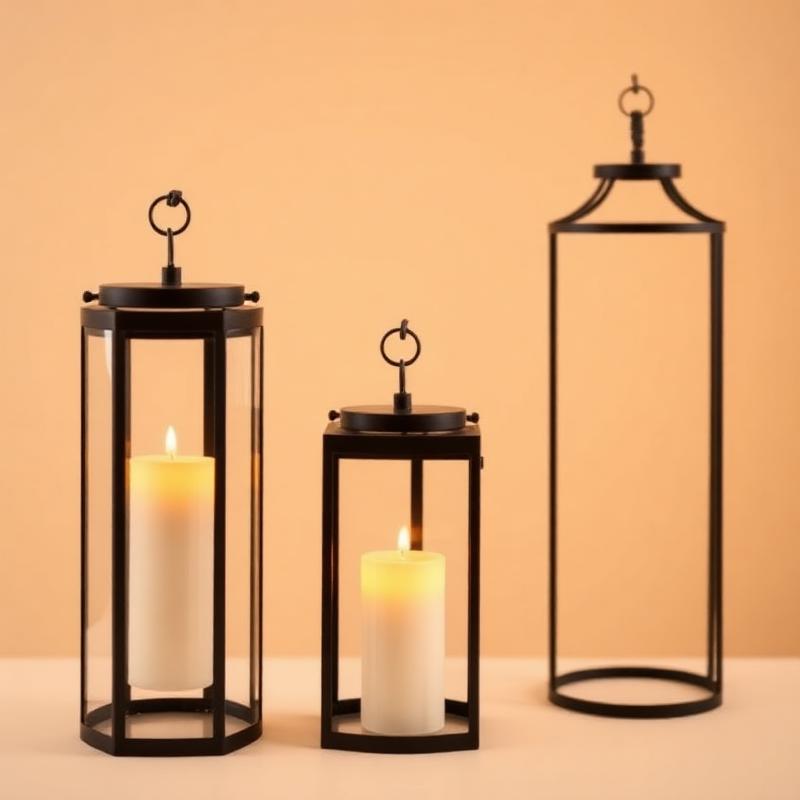
Flicker LED Lantern Trio
Three graduated black metal lanterns with warm, timer-equipped LED pillars — the fastest way to make a porch glow at dusk.
Curated pick · Available at Amazon
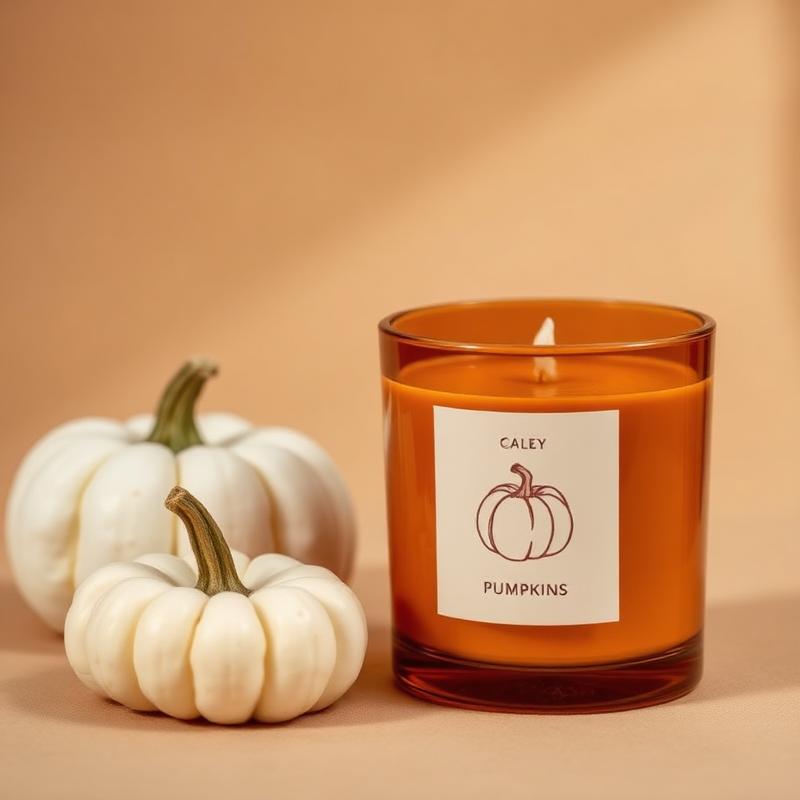
Pumpkin & Cedar Amber Candle
Pumpkin, cedar, and clove in an amber glass vessel. Light it an hour before guests arrive and the house does the rest.
Curated pick · Available at Etsy
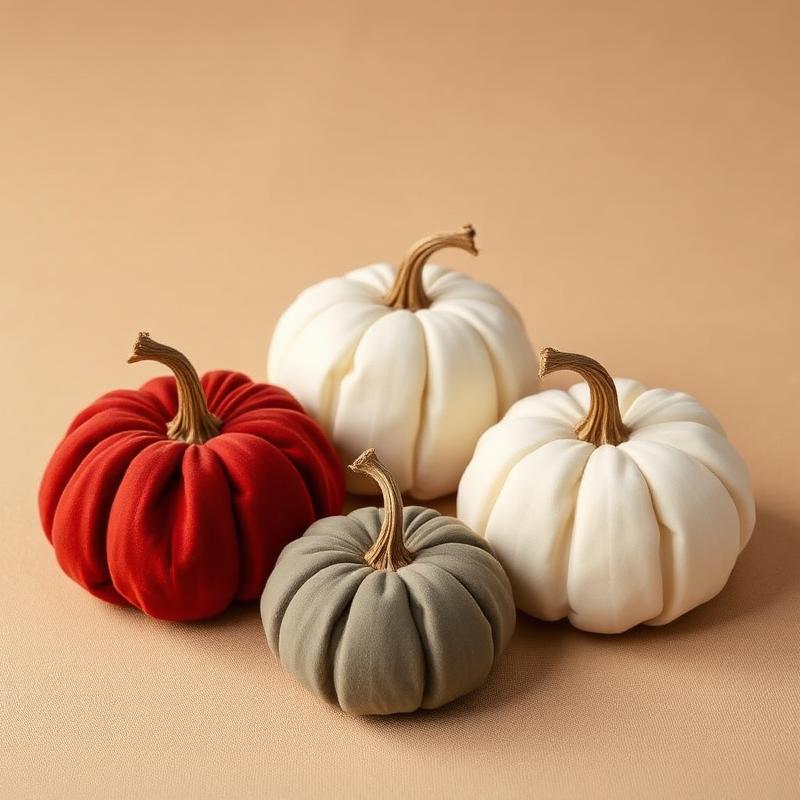
Heirloom Fabric Pumpkin Set
Five velvet pumpkins in rust, cream, and sage with real dried stems. Weatherproof, squirrel-proof, and reusable for years.
Curated pick · Available at Etsy

Save this for later
Pin this guide to your Halloween board
October comes around fast. Save this now and future-you — standing on the porch with a stapler and a dream — will be grateful.
Save to PinterestFrequently asked questions
How do I style a mantel if I don't have a fireplace?
Every rule here works on any long horizontal surface — a console table, a wide bookshelf, a radiator cover, or a floating shelf. What you need is depth for layering and something to lean against at the back. A wall-mounted shelf with a picture leaning on it behaves exactly like a mantel.
How many objects should go on a mantel?
Fewer than you think. Three groupings is usually right for a standard mantel, with clear space between them. If you can't tell where one grouping ends and the next begins, there's too much. Take everything off and add back only what earns its place.
Are real candles safe on a mantel?
Only with care. Keep everything combustible at least thirty centimetres from a flame, never leave them unattended, and never place dried foliage or grasses near them — dried material catches extremely easily. Given the viewing distance on a mantel, good flicker LEDs are visually indistinguishable and remove the risk entirely.
What colours should I avoid?
Bright purple, lime green and black-and-orange stripes — the party-store palette. They fight the warm, muted look and they date the whole thing to one week. Stay in bone, charcoal, burnt orange, deep sage and brass and the mantel works from September to December.
When should I switch from the Halloween look to harvest?
1 November. Swap black candles for amber or beeswax, bring out all the pumpkins, add wheat or dried grasses, and put the obviously Halloween pieces away. It takes about fifteen minutes and buys you another month out of the same decor.